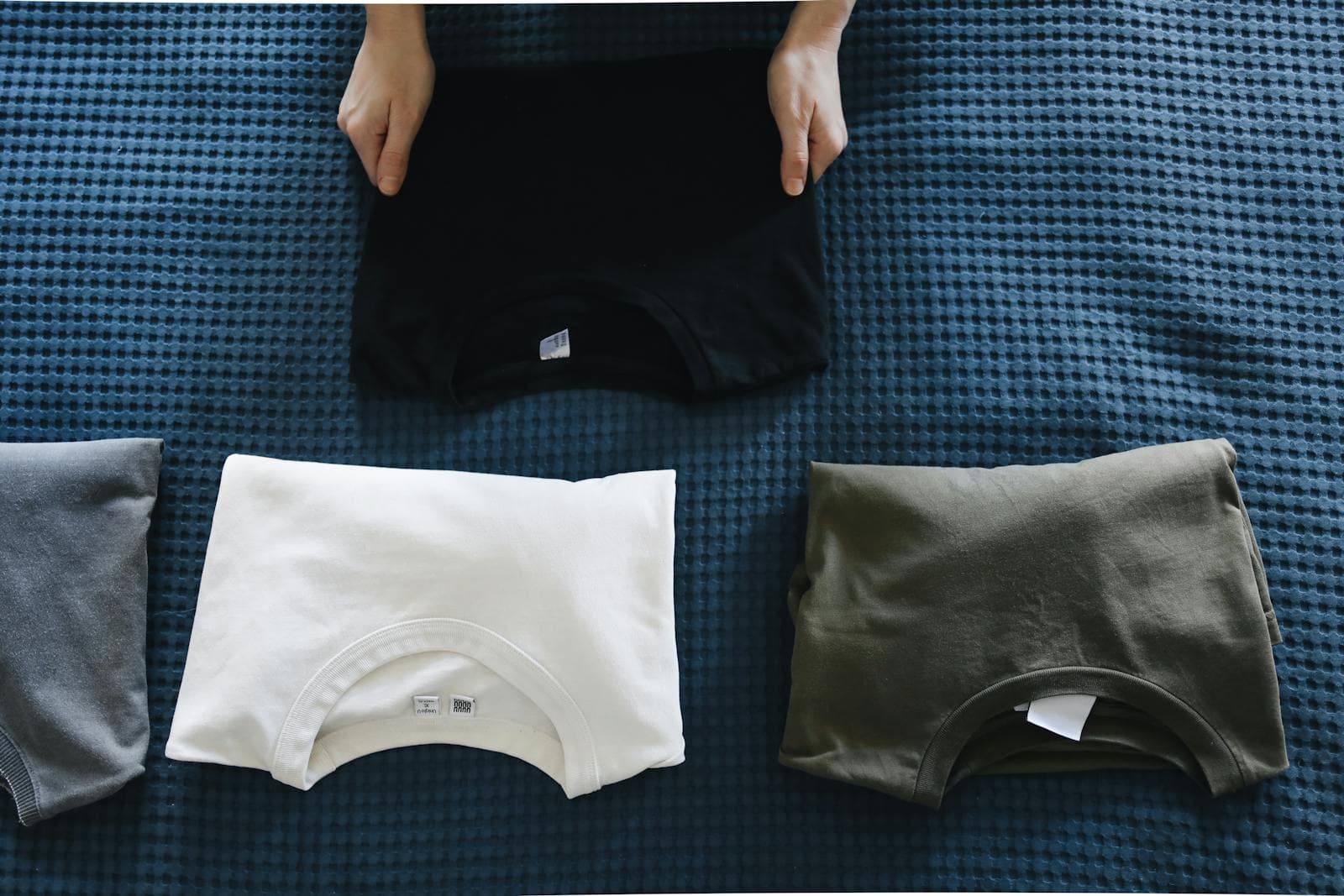

There is a warehouse question every small clothing brand has to answer on day one: how many do you print before anyone has bought anything? Guess high and you are sitting on boxes of a size nobody wanted. Guess low and the piece people actually liked is gone in a week.
Zieck answers that question by not guessing at all. Nothing in the shop exists as a physical garment until somebody orders it. That is print on demand, and because it changes what you can expect from delivery times and returns, it is worth explaining properly.
What is print on demand?
Print on demand means the garment is printed and finished only after an order is placed. Blank stock sits in a fulfilment centre, the design lives as a file, and the two are only brought together once your order comes in. There is no pre-printed inventory sitting in a storeroom waiting for a buyer.
It is the opposite of the traditional model, where a brand commits to a minimum run of a few hundred pieces per design, per colour, per size, and then spends the next year hoping the split was right.
What actually happens after you click order
- Your payment clears. Checkout confirms, you get an order confirmation, and the order moves into the fulfilment queue. This is usually instant.
- The blank is picked. A staff member pulls the exact garment, colour, and size you chose from the blank stock racks.
- The design is printed. The artwork file is loaded, the garment is positioned on the platen, and the print goes down. Zieck prints sit on the back, so that is where the graphic lands.
- It is cured. The ink is heat set so it bonds with the fibres rather than resting on top of them. This step is the difference between a print that survives fifty washes and one that cracks after five.
- Quality check and pack. The piece is inspected, folded, bagged, and labelled.
- It ships. You get a tracking link and the courier takes over.
Steps two through five are what people mean by production time. It is typically two to five business days. Shipping time sits on top of that, and it is the part that varies most by destination.
Why print on demand takes a few days longer
A big retailer can ship the same day because the item is already made, already packed, and already sitting on a shelf near you. A print on demand order has to be manufactured first. Those extra days are not a warehouse being slow, they are a garment being made.
The honest trade off looks like this:
- You wait a few days longer. Production plus shipping instead of shipping alone.
- Your size is basically always available. There is no sold out size 2XL, because nothing was pre-allocated.
- Nothing gets made that nobody wants. The unsold stock problem disappears, because unsold stock never gets printed.
Does the quality hold up?
This is the question that matters most, and the answer depends entirely on two things: the blank and the curing.
The blank is the undecorated garment. A print on demand piece is only as good as the shirt it starts life as, which is why fabric weight is worth paying attention to. If you want the detail on that, we wrote a full guide to hoodie weight and GSM.
The curing is the heat setting step. Done properly, the print becomes part of the fabric and moves with it. Done badly, it sits on the surface like a sticker and starts flaking at the first hot wash. Most horror stories about print on demand quality are really stories about undercured prints.
You can protect a good print at home too. Wash cold, turn the garment inside out, skip the tumble dryer. Our care guide covers the rest.
Is it more sustainable?
Partly, and it is worth being precise about which part.
The clear win is overproduction. The fashion industry routinely makes far more than it sells, and the surplus gets discounted, warehoused, or destroyed. Print on demand removes that category of waste entirely, because production is triggered by a real order from a real person.
The honest caveat is shipping. Individual parcels travelling from a fulfilment centre to one address are less efficient per garment than a pallet moving to a shop. Regional fulfilment helps a lot here, which is why orders placed in Europe are produced in Europe rather than flown in.
So: much better on waste, roughly comparable on logistics, and the net is still favourable. It is not a perfect system. It is a considerably less wasteful one.
What it means for returns and exchanges
Because your piece was made for your order, the best thing you can do is get the size right the first time. Check the measurements on the product page against a garment you already own and like the fit of, rather than going by your usual letter size. Fit differs between brands far more than the label suggests.
If something arrives faulty or misprinted, that is on us and we replace it. Just get in touch.
Frequently asked questions
How long does a print on demand order take to arrive?
Production takes roughly two to five business days, and shipping is added on top of that. For most European addresses the total is around one week. The production window is the part that is different from a normal webshop, because the garment is being made rather than picked off a shelf.
Is print on demand lower quality than screen printing?
Not inherently. Print on demand describes when a garment is made, not how it is printed. Quality comes from the blank garment and from curing the ink properly. A well made print on demand piece outlasts a cheap screen printed one, and a badly cured print of either kind will crack early.
Why can print on demand not offer same day shipping?
Because the item does not exist yet when you order it. Same day shipping requires finished stock sitting in a warehouse, which is exactly the inventory that print on demand is designed to avoid. The wait is production time, not processing delay.
Is print on demand better for the environment?
It removes overproduction, which is one of the largest sources of waste in clothing, since nothing is printed unless it has been bought. The trade off is less efficient shipping, as parcels go to individual addresses rather than in bulk to shops. Producing regionally rather than shipping across continents narrows that gap.
Can I cancel a print on demand order?
Only before production starts, which is a short window. Once the design has been printed onto the garment, the piece is made specifically for you and cannot go back into stock. Contact us as soon as possible if you need to change an order.
Does print on demand run out of sizes?
Far less often than traditional retail. Because no stock is allocated per size in advance, availability depends on the blank garment supply rather than on how well a brand guessed the size split months earlier.
Made for you, not for a warehouse
The reason we build this way is not efficiency for its own sake. It is that it lets a small studio in Groningen release designs that come out of actual memories, from a childhood mix-up in Papiamentu to a peeling window frame, without needing to bet a few thousand euros on each one ahead of time.
Every piece in the Zieck shop gets made because someone chose it. Have a look and pick yours.